Fracht Group Australia Logistics News - September 2026
1/9/2026
"The best time to plant a tree was 20 years ago. The second-best time is now."
- Chinese Proverb
Fracht Melbourne Office Relocation
FRACHT AUSTRALIA’S MELBOURNE OFFICE will relocate to new premises effective Monday, 7 September 2026. From that date, all correspondence and office visits for the Melbourne branch should be directed to Suite 209, 189 South Centre Road, Tullamarine VIC 3043. Customers, suppliers and business partners are requested to update their records with the new address. The office’s existing contact details will remain unchanged unless otherwise advised, supporting continuity of communication throughout the relocation. Questions regarding the move may be directed to Neelufa Buksh, Branch Manager for Melbourne, or to the relevant Fracht Australia representative.
Around the World
- EAST ASIA’S TYPHOON SEASON continues to disrupt shipping schedules. Typhoon Narra recently impacted southern China, adding to delays already caused by Typhoons Bavi, Noul and Dolphin. Further disruption is expected as Typhoon Saudel approaches the Chinese coastline between Zhejiang and Fujian provinces, home to the major container ports of Ningbo and Xiamen. According to Linerlytica, North Asia accounts for around half of current global congestion. The disruption is tightening effective vessel capacity, supporting higher transpacific freight rates while adding further pressure to already constrained global supply chains.
- CONTINUING DROUGHT CONDITIONS and repeated European heatwaves have pushed Rhine water levels to record lows, prompting warnings that large sections of the river may become commercially unnavigable. Shipping lines, including MSC, have introduced new congestion surcharges for truck and rail services as cargo is diverted away from barge transport. Industry representatives warned that the Rhine could effectively be split into separate navigable sections, preventing through movements along the waterway. With forecasts indicating little prospect of meaningful rainfall, logistics providers anticipate growing pressure on road and rail networks. Concerns are mounting that a large-scale modal shift could worsen congestion across Northern Europe and place additional strain on already restricted transport capacity.
- CONGESTION AT THE PANAMA CANAL is worsening as geopolitical disruptions and pending water-level restrictions increase pressure on global shipping networks. Industry sources report more than 100 vessels waiting to transit the canal, with delays of up to ten days being experienced on some routes. Increased demand from energy carriers avoiding Middle Eastern trade lanes has added to traffic levels, disrupting schedules and reducing equipment availability. The Panama Canal Authority is also preparing to reduce maximum draught allowances for Neo-Panamax vessels in response to anticipated El Niño-driven water shortages.
- LIEGE AIRPORT HAS REPORTED an immediate shift in e-commerce traffic patterns following the European Union’s introduction of a EUR3 charge on low-value imports. During July, e-commerce shipments into the Liege customs zone fell 24% year on year and 41% compared with June, while customs declarations declined by more than half. Airport authorities said the measure had significantly altered import structures, with lower-value business-to-consumer consignments falling sharply while shipments valued above EUR150 increased. Despite the decline in e-commerce volumes, overall freight throughput at the airport rose 4% year on year, supported by growth in pharmaceuticals, flowers and data centre equipment.
- CMA CGM HAS PARTIALLY RELAXED restrictions on transit cargo moving through Saudi Arabia’s Jeddah Port, allowing certain shipments to be accepted where a Saudi-based notify party is listed on the bill of lading. The change follows months of severe congestion that prompted carriers to limit cargo movements through the gateway. Industry reports indicate container release times have stretched to between six and eight days, while vessel berthing delays can reach ten days. Several major carriers have introduced congestion-related surcharges, reflecting ongoing operational challenges.
- HAPAG-LLOYD HAS AGREED to acquire a 25% stake in APM Terminals’ Maasvlakte II facility in Rotterdam, strengthening its position within one of Europe’s largest container gateways. The investment supports the carrier’s long-term access to automated terminal capacity and reinforces the terminal’s strategic role within the Gemini Cooperation network with Maersk. APM Terminals will retain operational control while continuing expansion projects that include additional deepsea berth capacity, new rail infrastructure and increased automation. Once completed, the upgrades are expected to raise annual handling capacity to 5.4 million TEU (twenty-foot equivalent unit). The transaction remains subject to regulatory approval, with financial terms not disclosed.
Seafreight News
- SOUTH KOREAN CARRIER HMM upsizes plan to boost box shipping fleet with extra orders has approved a USD19.7 billion expansion program aimed at growing its container fleet to 166 vessels with capacity of 1.55 million TEU by 2030, exceeding targets outlined in its 2024 mid-term strategy. The plan also increases bulk carrier capacity targets and supports the company’s hub-and-spoke network model, combining large long-haul vessels with smaller regional ships. In parallel, HMM’s subsidiary Washington United Terminals in Tacoma has ordered four new cranes to raise annual terminal capacity from 590,000 TEU to 880,000 TEU and accommodate larger vessels. The carrier currently operates 96 containerships with capacity of 1.02 million TEU.
- ANL INTRODUCED A REVISED TRANS-TASMAN network in August designed to improve schedule reliability, operational efficiency and transit times between Australia and New Zealand. The revised rotation adds a second Auckland call and changes the service sequence to Sydney, Melbourne, Auckland, Lyttelton, Nelson, Port Chalmers, Napier, Tauranga and Auckland before returning to Sydney. ANL says the enhancements will improve connectivity to Australian destinations, strengthen coastal cargo movements within New Zealand and address operational constraints at Nelson. The revised service also partially fills the gap left by the withdrawal of Swire Shipping’s Pacifica service. ANL currently deploys four vessels of between 1,756 TEU and 1,809 TEU on the route.
- CMA CGM REPORTED A STRONG FINANCIAL PERFORMANCE for Q2 2026, driven by higher freight rates and solid cargo demand. Shipping EBITDA increased 42.4% year-on-year to USD2.26 billion, while shipping revenue rose 22% to USD9.96 billion on volumes of 6.33 million TEU. Average revenue per TEU increased 15.1% to USD1,575. Group revenue reached USD15.7 billion, with EBITDA rising 31% to USD3 billion. CMA CGM attributed the improvement to stronger shipping returns amid geopolitical disruption and supply chain uncertainty.
- DEMAND FOR VEHICLE CARRIER TONNAGE continues to strengthen as Chinese automotive exports, particularly electric vehicles, expand rapidly. Chinese EV boom fuels demand and charter rates for car-carriers reports modern car carriers are again approaching charter rates of USD100,000 per day, with several newly delivered vessels fixing at rates between USD80,000 and USD90,000 per day. China exported nearly 5.1 million vehicles in the first half of 2026, including more than 2.3 million new-energy vehicles. At least 40 new car carriers have been ordered this year, reflecting confidence in the sustained strength of the global vehicle shipping market.
- SHARP FALL IN Q1 PROFITS – but ONE's new network strategy paying off, reported a significant decline in net profit, despite stronger cargo volumes and revenue growth. Revenue increased to USD4.54 billion for the quarter ending 30 June, while net profit fell to USD31 million due largely to higher fuel costs linked to Middle East disruption. Liftings rose to 3.28 million TEU and average freight rates improved to USD1,300 per TEU. The carrier has upgraded its full-year profit forecast from USD300 million to USD900 million, supported by stronger freight markets and continued implementation of its ONE2030 strategy.
- HORMUZ FEES, FIRMER RATES AND CONGESTION challenge supply chains and highlights continued uncertainty surrounding proposals to introduce transit or service fees for vessels using the Strait of Hormuz. Industry bodies have urged international regulators to oppose the concept, warning it could increase costs across global supply chains. Congestion continues to affect departures from Chinese ports and is creating delays through transhipment hubs. Additional bottlenecks are being reported across Southeast Asia, India and major European gateways as shipping lines prepare for further general rate increases during August.
- MAERSK LATEST TO RAISE GUIDANCE after strong Q2 saw AP Moller-Maersk increase its 2026 earnings outlook following stronger second-quarter performance and improved market visibility. The company now expects underlying EBITDA of USD10.5 billion to USD12.5 billion, up from previous guidance of USD8 billion to USD10 billion. Ocean volumes grew 4.1%, driven by strong Asian exports, while average freight rates increased 22% and vessel utilisation remained high at 96%. Maersk also cited continued congestion across ports and inland networks as a result of unbalanced trade flows and strong Far East demand.
- HAPAG-LLOYD SEES Q2 TURNAROUND but lags others reported improved market conditions during the second quarter of 2026, supported by stronger Asian export demand and improved US import volumes. Transport volumes increased to 3.5 million TEU and average freight rates rose 9% year-on-year to USD1,475 per TEU. However, profitability remained constrained by approximately USD600 million in additional costs associated with Middle East disruption, including higher bunker, insurance, storage and rerouting expenses. The company noted strong performance from its Gemini network partnership and growing contributions from its terminal and infrastructure business. Improved second-quarter conditions led Hapag-Lloyd to raise its full-year earnings guidance, although management acknowledged ongoing uncertainty surrounding freight markets and geopolitical developments.
- HÖEGH’S Q2 PROFITS HIT THE SKIDS despite the company describing its second-quarter performance as solid. Revenue increased slightly to USD376 million, but EBITDA fell from USD166 million to USD122 million and net profit declined from USD123 million to USD86 million year-on-year. Höegh attributed the weaker result to geopolitical disruption, elevated fuel costs and operational challenges linked to Middle East trade disruptions. The company highlighted continued strength in vehicle shipping demand, supported by rapidly growing Chinese exports, and noted that charter market conditions tightened significantly during the quarter. While fuel costs are expected to continue affecting short-term performance, Höegh expects bunker adjustment factor recovery and strong demand for vehicle and high-and-heavy cargoes to support future trading conditions.
Airfreight News
- GLOBAL AIR CARGO DEMAND REMAINED RESILIENT in June, with IATA reporting an 8.5% year-on-year increase in cargo tonne-kilometres, outpacing both global trade growth and capacity expansion. Demand was driven by shipments of high-value technology products, urgent freight movements and recovery in Middle East networks. Capacity increased by only 4.4%, supporting stronger load factors across most regions. North America recorded the strongest growth at 13.1%, while Asia Pacific volumes increased 7.9%. Trade lane performance varied significantly, with Asia to North America remaining particularly strong, while Europe to Middle East traffic continued to be impacted by regional conflict. Despite easing fuel prices, IATA noted ongoing risks from geopolitical tensions and shifting trade policies.
- CATHAY PACIFIC CARGO reported a strong first half of 2026, increasing cargo tonnage by 9% year-on-year as growing trade activity from mainland China supported demand across Asia and international markets. The carrier has also adapted to operational challenges including Typhoon Noul disruptions in Hong Kong and ongoing tensions in the Gulf region. Conflict in the Middle East has delayed the planned resumption of services to Dubai and Riyadh, while higher oil prices have prompted fuel surcharge increases. India has emerged as a key growth market, supported by strong manufacturing, pharmaceutical, electronics and e-commerce activity. Looking ahead, Cathay expects continued demand for AI-related technology shipments, particularly server racks and semiconductors, while monitoring the impact of new European e-commerce duties.
- ISTANBUL AIRPORT OVERTOOK FRANKFURT as Europe’s busiest cargo gateway during the first half of 2026 after handling just over one million tonnes of airfreight, an increase of 10.8% year-on-year. The growth was largely attributed to cargo diversions from Middle East hubs following regional conflict, with Turkish Airlines reporting a corresponding increase in cargo volumes and revenue. Frankfurt’s growth remained modest at 1.3%, affected by economic conditions, industrial action and operational disruptions. Other European cargo hubs, including Amsterdam, Leipzig and Liege, also posted strong growth. The report highlights how geopolitical events continue to reshape cargo routing patterns across Europe, with airlines and logistics providers increasingly relying on alternative transit hubs to maintain network stability.
- GLOBAL AIRFREIGHT VOLUMES contracted in the first full week of August, with market data provider WorldACD reporting a 4% week-on-week decline in chargeable weight across all major regions. Capacity also eased by 1%, while average freight rates softened slightly to USD2.95 per kilogram, although remaining 22% above year-earlier levels. Asia Pacific exports were particularly affected, with declining traffic to both Europe and North America. Typhoon Dolphin disrupted air traffic and logistics operations across China, while the removal of low-value e-commerce exemptions in Europe continued to suppress volumes from China and Hong Kong. Despite the short-term decline, global demand remains marginally ahead of last year, reflecting ongoing strength in higher-value cargo markets.
- NAVI MUMBAI INTERNATIONAL AIRPORT (NMIA) is rapidly establishing itself as a major cargo hub for India as airlines shift operations away from capacity-constrained Mumbai Airport. Temporary restrictions on freighter flights at Mumbai have accelerated interest in the new facility, which expects to add 13 new freighter services linking Asia and Europe. Hong Kong Air Cargo recently launched the airport’s first international freighter operation on behalf of DHL Global Forwarding, while several major carriers are reportedly planning future operations. Adani Group aims to handle 800,000 tonnes of cargo in the airport’s initial phase, expanding to three million tonnes over time. Industry stakeholders view NMIA as a key growth platform as Indian air cargo volumes continue to rise, supported by strong international trade demand.
Oceania Ports and Airports
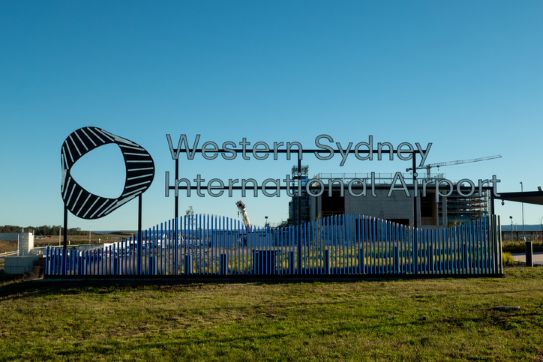
- WESTERN SYDNEY INTERNATIONAL AIRPORT officially commenced freight operations in late July, opening its 24-hour cargo precinct ahead of passenger services commencing in October. The facility will initially handle around 250,000 tonnes of freight annually and will be used by operators including Qantas Freight, dnata Cargo, Menzies Aviation and Texel Air. Industry groups welcomed the development, noting the additional capacity, operating flexibility and proximity to Western Sydney’s major logistics and industrial precincts. The airport is expected to support key export industries including perishables, pharmaceuticals, manufacturing and agricultural products, while providing curfew-free operations that offer greater scheduling flexibility for freight forwarders and exporters moving time-sensitive cargo.
- INTERNATIONAL CONTAINER TERMINAL SERVICES INC (ICTSI), owner of Melbourne’s Victoria International Container Terminal, reported strong first-half results for 2026, driven by higher throughput and contributions from recently acquired terminals. Container volumes increased 16% to 8.12 million TEU, while revenue rose 27% to USD1.92 billion and EBITDA increased 24% to USD1.23 billion. Growth was supported by new operations in South Africa and Indonesia, together with stronger trade activity across Asia and the Americas. ICTSI also confirmed capital expenditure plans of approximately USD740 million during 2026, including expansion projects at several global terminals and ongoing investment at VICT to support future capacity and operational performance.
- CONSTRUCTION HAS COMMENCED on Flinders Port Holdings’ AUD50 million Outer Harbor Intermodal Precinct in South Australia, designed to strengthen logistics efficiency and trade connectivity at Port Adelaide. Located adjacent to the Flinders Adelaide Container Terminal, the development will integrate warehousing, storage, packing and rail connections within a single precinct. The first stage includes a new warehouse capable of processing 8,100 TEU annually, alongside significant pallet storage and container stacking capacity. Flinders Ports said the investment builds on more than AUD300 million of recent infrastructure upgrades and aims to improve links between port, road and rail operations. The project is intended to enhance South Australia’s competitiveness as a national and international trade gateway.
- LYTTELTON PORT COMPANY DELIVERED RECORD FINANCIAL RESULTS for the second consecutive year in 2025/26, reporting net profit after tax of NZD35 million, up 40% year-on-year, alongside revenue growth of 9% to NZD226 million. Container volumes remained stable at 427,462 TEU, while total bulk cargo increased 9%, supported by stronger agricultural activity and increased vehicle imports. The port also continued progress on major infrastructure works, including the Te Awaparahi Bay reclamation project, which remains on schedule and within budget. Sustainability targets were achieved across waste reduction and greenhouse gas emissions programs as the company progresses towards longer-term environmental objectives.
- FREMANTLE PORT recorded several significant milestones during the 2025/26 financial year, including a national record for rail-based container freight movements. More than 240,000 TEU, representing 26.4% of container trade through Fremantle’s Inner Harbour, were transported by rail, supported by the State Government’s container rail subsidy program. The port also achieved a record annual throughput of 920,521 TEU, exceeding the previous record by 3.7%. In a separate development, construction of the new Fremantle Traffic Bridge is progressing ahead of schedule, with the bridge now expected to open earlier than originally planned.
- AVALON AIRPORT MELBOURNE and air logistics specialist Teleport have formed a strategic partnership to establish a new e-commerce gateway serving Australia. The development is designed to improve connectivity with major Asian export markets and support growing cross-border e-commerce demand. Teleport currently services key Australian airports from China, Hong Kong, India, Malaysia and Vietnam, and plans to begin phase one operations at Avalon during the second half of 2026, initially focusing on shipments from China. Avalon Airport said the partnership strengthens its position as a freight and logistics hub by leveraging its curfew-free operations, available capacity and ability to process both e-commerce and general cargo efficiently.
- CONCERNS HAVE EMERGED regarding landside performance at DP World’s West Swanson Terminal in Melbourne following reports of extended truck turnaround times. According to the Container Transport Alliance Australia, vessel bunching and increased throughput, combined with ongoing civil works that have reduced yard capacity by approximately 1,100 TEU, have contributed to delays. Truck turnaround times have reportedly increased to between two and three hours, compared with the industry expectation of less than one hour. Industry participants have warned that continued vessel congestion and peak season volumes may place further pressure on terminal operations, truck scheduling and container availability. DP World has indicated additional labour resources and vehicle booking slots are being allocated to assist operations.
- THE CONTAINER VESSEL ANL GIPPSLAND is expected to establish a new container exchange record at DP World’s Port Botany terminal, with a forecast exchange of 11,053 TEU. This surpasses the previous record of 10,746 TEU set earlier this year and is significantly higher than the terminal’s typical exchange volume of approximately 6,200 TEU per vessel call. The milestone reflects an ongoing trend toward larger ships and increased container exchanges on Australian trade lanes as carriers seek greater economies of scale. DP World noted that accommodating larger vessels places increasing demands on berth infrastructure, cranes, yard capacity and landside transport networks, highlighting the importance of continued investment in port capacity and operational efficiency.
Customer Service
Fracht Group Australia - keeping your supply chain moving. For further information or tailored guidance of any of the topics covered, please contact your Fracht representative or our friendly team at fracht@frachtsyd.com.au