Fracht Group Australia Logistics News - November 2026
2/11/2026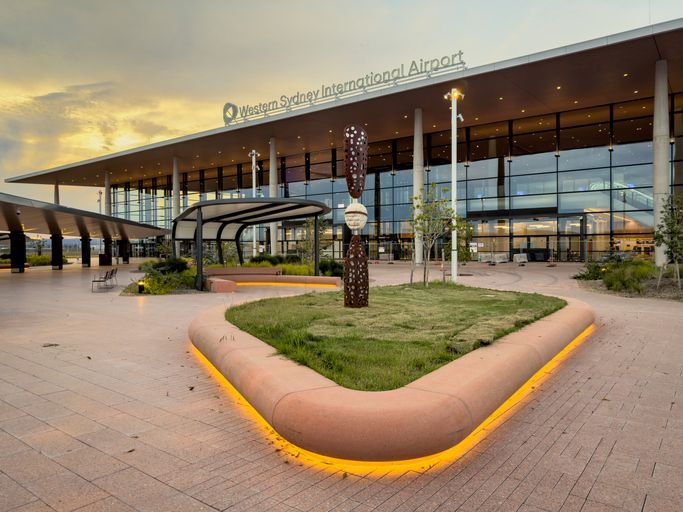
"The pessimist complains about the wind; the optimist expects it to change; the realist adjusts the sails."
- William Arthur Ward
Around the World
- THE PROLONGED CLOSURE OF THE STRAIT OF HORMUZ is reshaping Gulf container networks, with Jebel Ali and Khalifa facing the potential permanent loss of relay transhipment traffic. Carriers have redirected services towards alternative hubs including Khor Fakkan, Sohar, Salalah, Colombo, Vizhinjam and Jeddah, while sharply higher insurance costs continue to affect Hormuz transits. DP World is developing 2.5 million TEU (Twenty Foot Equivalent Unit) of capacity outside Hormuz under its Fujairah concession. Despite the transhipment disruption, Jebel Ali is expected to retain an important regional role through its established free-zone, warehousing, industrial and air cargo infrastructure.
- INDUSTRIAL ACTION AT GERMANY’S MAJOR PORTS has been averted for the time being after dockworkers represented by ver.di accepted new contract terms, although employer approval was still required. The agreement includes a 3.4% wage increase, higher holiday pay and an increased annual payment for workers in high-turnover container operations. Congestion nevertheless remains, with yard utilisation reported at 90% in Bremerhaven and 80–85% in Hamburg.
- PERSISTENTLY LOW RHINE WATER LEVELS continue to restrict container barge operations, including services to Rotterdam and Antwerp. As a result, freight is moving onto European rail and road networks that are already under pressure. Contargo reported average barge waiting times of 56 hours in Rotterdam and 36 hours in Antwerp. Around Duisburg-Ruhrort, barges were running at about two-thirds of normal capacity, and some services further upstream were suspended. Around 35% of container movements in the Dutch hinterland normally use inland waterways, so alternative capacity is hard to secure. Replacement truck capacity can take up to two weeks to arrange, and rail capacity up to six weeks. Even after water levels recover, vessel schedules could take around 10 days to return to normal. Southern Germany, Switzerland and the Upper Rhine corridor are feeling the strongest effects.
- ASIA-EUROPE CONTAINER SERVICES are continuing to return to the Red Sea and Suez Canal after three years of Cape of Good Hope diversions, despite ongoing security concerns and an attack on the 2,400 TEU CUL Klang. Alphaliner found that 24 of 46 direct Far East–Europe services now use the Red Sea. That's about 63% of capacity on the trade, made up of 70% of Far East–Mediterranean capacity and 58% of Far East–North Europe capacity. MSC deploys 2.2 million TEU across 11 loops through the waterway, and Hapag-Lloyd and Maersk together account for 1.76 million TEU. High fuel costs are helping make the shorter route attractive. Singapore VLSFO (Very Low Sulphur Fuel Oil) is at US$881 per tonne, up 97% year on year, and Drewry puts the saving from a Suez routing at about US$1 million per round voyage. Drewry now forecasts Suez traffic will reach 80% of pre-diversion levels by February 2027. However, some carriers are still keeping Cape options open, and industry experts expect routings to stay inconsistent in the near term. Cargo owners are concerned about routing changes made at short notice, particularly where their insurance policies don't already cover Suez transits. Meanwhile, port congestion around the world is tying up about 12% of vessel capacity, a four-year high. East Asia, northern Europe and the Indian Subcontinent are badly affected, and schedule reliability is falling as a result.
- CHINESE SHIPPING COMPANIES and vehicle manufacturers are expanding car-carrier capacity as automotive exports increase. Cosco Shipping Specialized Carriers, BYD and SAIC Anji Logistics plan investments of around US$2.5 billion covering 21 vessels of 11,000 CEU capacity. If anticipated orders are concluded by year-end, more than 100 car-carriers would have been ordered during 2026, a record, with the existing orderbook equivalent to 26.7% of the active fleet. Ningbo Ocean Shipping is also planning to charter two 7,000 CEU LNG dual-fuel vessels. Chinese monthly vehicle exports now exceed one million units.
- STRONG CONTAINER GROWTH and increasingly large vessels are putting pressure on West African ports and their supporting transport networks. Drewry recorded a 19.4% year-on-year increase in regional container throughput last year, while Douala operated at 102% utilisation and several other ports exceeded 80%. Congestion reflects both terminal constraints and inadequate hinterland infrastructure, including road congestion, customs delays, truck shortages and limited off-dock storage. DP World has invested US$340 million in its Dakar terminal, lifting throughput from 265,000 TEU in 2008 to 850,000 TEU in 2025. Its new US$1.2 billion Ndayane deepwater project will provide initial annual capacity of 1.2 million TEU.
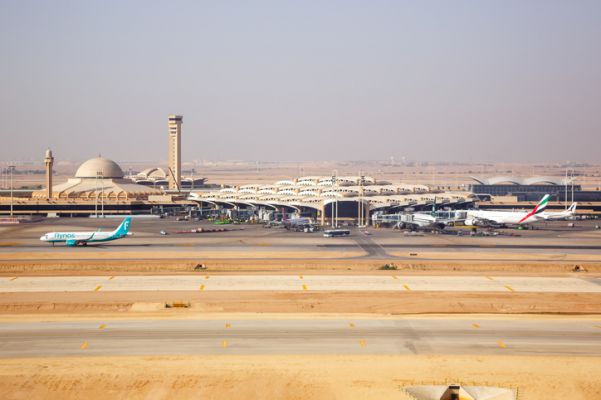
- SAUDI ARABIA’S INTERNATIONAL AIR CARGO capacity fell 33% over a three-day period as the shutdown of King Khalid International Airport in Riyadh disrupted flights and heightened regional airspace risks. Combined freighter and widebody capacity declined by 3,537 tonnes to 7,292 tonnes, while Riyadh capacity fell 99%, from 3,925 tonnes to just 26 tonnes. Airline cancellations could prolong the capacity squeeze, with some Saudi-bound cargo already held in Muscat. Road transport has been identified as an alternative for affected shipments. European aviation authorities have also recommended avoiding specified areas of Saudi airspace, with longer routings potentially raising fuel requirements and reducing payloads on weight-constrained operations.
Seafreight News
- TYPHOONS AND PORT DISRUPTION ACROSS ASIA have driven a sharp deterioration in container shipping reliability, effectively removing around 3 million TEU, or 8.5% of the global container fleet, from available capacity. Schedule reliability fell below 50% in August after declining 12.7 percentage points over two months, while the average delay for late vessels increased to 6.8 days. Sea-Intelligence said the current level of capacity absorption is significantly above the pre-pandemic average of 2.2%. Based on previous congestion recovery rates, conditions could take seven to ten months to return to the low point recorded in June 2025, potentially leaving disruption in place through the pre-Chinese New Year 2027 peak.
- GEMINI COOPERATION PARTNERS MAERSK AND HAPAG-LLOYD will reroute their Asia-Mediterranean Loop 1 through the Suez Canal and Red Sea in both directions. The first westbound sailing is scheduled to depart Tanjung Pelepas on 17 October, with each transit subject to security review and naval protection. The Suez routing reduces the service’s round voyage from 98 to 84 days and lowers the number of vessels required to maintain weekly frequency from 14 to 12. Half of Gemini’s four Asia-Mediterranean services will consequently be routed via Suez. Meanwhile, CMA CGM announced new FAK rates of US$4,600 per 40-foot container to the western Mediterranean and US$4,900 to the eastern Mediterranean from 19 October.
- NEPTUNE PACIFIC IS EXPANDING its Pacific fleet with the charter of the 766 TEU ICS Silver Lining, which will take over the MICROPAC service from December, operating between Kiribati, Fiji and the Marshall Islands. The deployment will allow Southern Pearl to transfer to the INTRAPAC service covering Tuvalu and Wallis and Futuna. The multipurpose ICS Silver Lining, built in 2005, offers capacity for 120 reefers and is equipped with two onboard cranes. Neptune Pacific said the changes will provide greater capacity for containers, reefers and project cargo while increasing operational flexibility across the Central Pacific.
- WALLENIUS WILHELMSEN HAS RAISED US$300 MILLION through a private placement as it considers up to 12 additional newbuildings for delivery from 2030. The vehicle logistics and ro-ro group is in advanced discussions for four large dual-fuel LNG vessels, with options for another eight ships offering quarterly deliveries from 2031 onwards. If exercised, the expansion would increase its newbuilding programme to 26 vessels, including options, with deliveries extending from the third quarter of 2026 through 2032. The proceeds, together with debt financing, are intended to fund the newbuilding programme and general corporate requirements.
- WÄRTSILÄ WILL SUPPLY 36 DUAL-FUEL 34DF ENGINES for 12 new 18,000 TEU container vessels being constructed for CMA CGM at Jiangnan Shipyard in China. The vessels will operate on LNG, with the engines supplied through Wärtsilä’s Shanghai joint venture. The 34DF platform is designed for fuel-efficient LNG operation across a broad range of load profiles, with CMA CGM citing reliability and lower emissions as key considerations. Equipment deliveries to the shipyard are scheduled to begin in 2027. The engine order for all 12 vessels was booked during the first quarter of 2026.
- MAERSK WILL INTRODUCE a new documentation policy for eligible Australian export shipments, requiring complete shipping instructions and the bill of lading verification process to be finalised at least 38 hours before the vessel’s estimated arrival at the first load port. Shipments that fail to meet the deadline may be excluded from the final load list and rolled to the next available vessel, with resulting storage, detention, demurrage or handling costs potentially charged. The policy will soft-launch on 2 November 2026, followed by a hard stop from 30 November.
- ZIM INTEGRATED SHIPPING SERVICES has significantly increased its 2026 earnings guidance, citing continued strong market demand and favourable freight-rate momentum. The carrier now expects adjusted EBITDA of US$2.7–3.0 billion and adjusted EBIT of US$1.4–1.7 billion, compared with previous guidance of US$2.0–2.4 billion and US$700 million–US$1.1 billion respectively. ZIM shares rose following the revised guidance but remained around 20% below Hapag-Lloyd’s reported US$35-per-share takeover offer, equivalent to approximately US$4.2 billion. The proposed transaction continues to face uncertainty following renewed domestic opposition and questions surrounding the approval process.
- OOCL PARENT ORIENT OVERSEAS INTERNATIONAL reported significantly stronger third-quarter operating results, with liner revenue rising 45.1% year-on-year to US$3.28 billion. Total liftings increased 9% to 2.12 million TEU, while loadable capacity grew 3.6% and the overall load factor increased 4.2%. Average liner revenue per TEU was 33.1% higher than in the corresponding 2025 quarter. For the first nine months of 2026, revenue increased 18.9% and volumes rose 6.5% to 6.25 million TEU. In the Intra-Asia/Australia segment, third-quarter liftings increased 4.6% to 981,336 TEU and revenue rose 23.7% to US$947.6 million.
- AUSTRALIA’S RO-RO (ROLL ON / ROLL OFF) SUPPLY CHAIN is adapting to rising electric and hybrid vehicle imports and a changing mix of vehicle-sourcing markets. During FY26, 22.9% of new vehicles sold in Australia were manufactured in China, while 32% were electric, plug-in hybrid or hybrid vehicles. Port Kembla handled approximately 390,000 vehicles, with hybrid vehicles accounting for around 25% and fully electric vehicles about 12% of FY26 volumes. NSW Ports is investing $45 million to add a fifth ro-ro capable berth at Port Kembla, scheduled for completion by mid-2027.
Airfreight News
- GLOBAL AIR CARGO DEMAND INCREASED 4.4% year-on-year in August, while available capacity declined 0.1%, lifting the global cargo load factor by two percentage points to 46%. Yields also increased month-on-month for the first time since April. North American carriers recorded the strongest regional demand growth at 6.6%, followed by Latin America and the Caribbean at 5.1%, Asia-Pacific at 4.3% and Europe at 4.1%. African airlines recorded 3% growth, while Middle Eastern carriers increased 1%. Asia-North America was the strongest-performing major trade lane. The operating environment remained challenging, however, with jet fuel prices rising 8.3% month-on-month and standing 79.2% above August 2025 levels.
- STRONG DEMAND FOR ARTIFICIAL INTELLIGENCE INFRASTRUCTURE is supporting both international trade and airfreight flows, particularly from Asia. Goods used for AI development, including semiconductors and data-transmission equipment, accounted for 42% of global goods trade growth in 2025 and 76% during the first quarter of 2026. Southeast Asian air cargo capacity is increasingly being absorbed by AI and semiconductor shipments rather than e-commerce. Global goods trade recorded its strongest first-half growth in 15 years outside the exceptional post-Covid rebound, with East Asia and the Pacific leading regional growth. Trade values in the region increased 24% during the first five months of 2026 compared with the same period last year, followed by Europe at 12% and Sub-Saharan Africa at 11%.
- AIR CARGO VOLUMES FROM CHINA AND HONG KONG to Europe continued to decline year-on-year in September, but showed signs of improvement following steeper falls during July and August. Combined tonnage was down 10%, compared with declines of 14% in July and 15% in August. Mainland China-Europe traffic performed considerably better, falling just 2% year-on-year, while Hong Kong-Europe volumes declined 24%. In contrast, China-US volumes increased 17% year-on-year in September.
- HONG KONG INTERNATIONAL AIRPORT recorded a return to cargo growth in September after two consecutive months of year-on-year declines. The airport handled 433,000 tonnes, up 6.3% compared with September 2025, driven by a 26.9% increase in transhipments and a 9.2% rise in imports. Southeast Asia and mainland China were the main growth markets, helping offset weaker European volumes. Cargo throughput for the first nine months reached 3.8 million tonnes, 3.1% above the same period last year. Singapore Changi Airport also recorded strong growth, with September cargo volumes increasing 9.7% to 191,000 tonnes. Changi’s year-to-date volumes reached 1.7 million tonnes, supported particularly by AI-related semiconductor and electronics shipments.
- SCHIPHOL AIRPORT handled 127,750 tonnes of cargo in September, an increase of 7.6% year-on-year. Exports rose 12.5% to almost 62,000 tonnes, supported by traffic to Africa, the Far East and destinations within Europe, while imports increased 3.4%. Cargo traffic involving Latin America rose almost 44%, while the number of dedicated freighter flights increased more than 11% to 1,400. Schiphol’s cargo throughput for the first nine months of 2026 was 9.6% higher year-on-year. Brussels Airport also recorded growth, with September cargo volumes increasing 6.8% to more than 70,000 tonnes, primarily driven by a 37% increase in trucked freight. By contrast, third-quarter cargo volumes at Liège Airport declined marginally by 0.1%.
- AFRICAN AIRFREIGHT DEMAND is benefiting from disruption to ocean freight services across the Middle East, as some shippers turn to air and express services to maintain supply chains. Forwarders active in West and Southern Africa have reported increased demand for capacity, with Nigeria, South Africa and Ghana among the stronger lanes. DHL Express has also introduced its Heavy Weight Express service, allowing shipments of up to 3,000 kg, with individual pieces weighing up to 1,000 kg. The service is aimed at sectors including automotive, energy, engineering, machinery and pharmaceuticals.
Oceania Ports and Airports
- TASPORTS AND SPANISH MARITIME RESEARCH ORGANISATION BLUENETCAT will co-lead an international “living lab” connecting Greater Hobart with Catalonia. The collaboration has identified four pilot areas covering a shared living-lab framework, dynamic port and city planning, real-time marine monitoring and nature-positive port infrastructure. TasPorts intends to make working port environments available for testing solutions under operational conditions, with successful initiatives potentially scalable internationally.
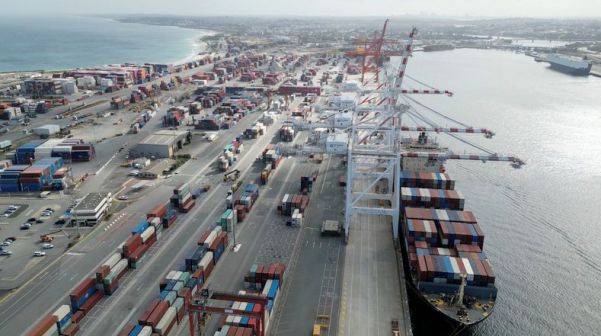
- FREIGHT AND TRANSPORT GROUPS are calling for continued investment in the Port of Fremantle as uncertainty surrounds the timing of Western Australia’s Westport development. Freight & Trade Alliance, Container Transport Alliance Australia and the Western Australia Transport Industry Association expect Fremantle to remain the state’s principal container gateway for at least another 10 to 15 years. Priorities identified include improving container rail efficiency, expanding Higher Productivity Freight Vehicle access and strengthening landside logistics. The Westport project is being planned alongside major AUKUS-related infrastructure development around Henderson, creating overlapping requirements for labour, materials and construction capacity. The WA Government said it remains committed to delivering the new Kwinana container port around 2040, with construction anticipated to begin before 2030.
- A NEW AUSTRALIAN STUDY has found that shifting freight from road and rail to coastal shipping could reduce greenhouse gas emissions by between 60% and 90% across the routes examined. The Emission Reduction Potential of Mode Shift to Maritime Transport compared road, rail and shipping across four Australian freight routes and found coastal shipping could reduce fuel use by 55% to 85% compared with road or rail. For longer routes, emissions reductions of around 70% were identified while moving larger cargo volumes. The report was developed by Transport Emissions / Energy Research and commissioned by the Maritime Union of Australia in collaboration with Maritime Industry Australia. It concludes that significant reductions can be achieved using existing vessels, infrastructure and maritime capabilities.
- THE PORTS OF SHANGHAI AND MELBOURNE have announced an implementation plan for their Green Shipping Corridor, moving the initiative into its delivery phase. The plan includes feasibility studies and the deployment of one or more low-carbon-fuel container vessels on the Shanghai-Melbourne route by 2035. It also covers green methanol and other non-fossil fuels, shore-power feasibility at Melbourne, digitalisation and collaboration with shipping lines and energy suppliers. Shanghai aims to establish annual bunkering capacity of one million tonnes for green methanol and biofuels, while the Port of Melbourne has committed to net-zero emissions from its own operations by 2030. Shanghai, the world’s busiest container port, handled more than 55 million TEU during 2025.
- WESTERN SYDNEY INTERNATIONAL AIRPORT officially opened on 25 October, becoming Australia’s first new major international airport in more than 50 years. Initial Jetstar domestic services connect Western Sydney with the Gold Coast and Melbourne, with international operations beginning with Auckland. The 24-hour airport opens with capacity for up to 10 million passengers annually and is designed for long-term expansion to more than 80 million. Passenger operations follow the opening of the airport’s dedicated 24-hour Cargo Precinct on 27 July, which has already supported more than 1,000 flight movements.
Customer Service
Fracht Group Australia - keeping your supply chain moving. For further information or tailored guidance of any of the topics covered, please contact your Fracht representative or our friendly team at fracht@frachtsyd.com.au
Share this news via