Fracht Group Australia Logistics News - June 2026
1/6/2026
"The secret of change is to focus all of your energy, not on fighting the old, but on building the new."
- Socrates
AROUND THE WORLD
- TAIWAN’S MAJOR LINER OPERATORS, Evergreen, Yang Ming and Wan Hai, have urged government intervention to secure the release of vessels stranded in the Strait of Hormuz following the escalation of the US / Israel – Iran conflict. Seven ships from these carriers are among roughly 40 immobilised in the region, with insurers refusing coverage for transit without government-negotiated clearance. Containers have been offloaded, but vessels remain unable to depart due to blockades and insurance constraints. Reports indicate Iran may impose significant transit tolls, though carriers confirmed these would not be paid as they breach insurance conditions, leaving diplomatic solutions as the only pathway forward.
- SWISSPORT HAS AGREED TO ACQUIRE a majority stake in CV Handling, the primary ground handling provider across seven airports in Cabo Verde, following a government-led privatisation process. The acquisition strengthens Swissport’s footprint in Africa, complementing its existing operations across six countries. Under the agreement, CV Handling will benefit from Swissport’s operational standards, digital capabilities and global network. Planned investments include infrastructure upgrades, training facilities and operational improvements, with a focus on enhancing service levels at key hubs such as Sal and Praia. The transaction remains subject to regulatory approvals and aligns with Swissport’s broader growth strategy in aviation services.
- MSC HAS LAUNCHED A NEW EUROPE–RED SEA–MIDDLE EAST EXPRESS SERVICE in response to disruption linked to renewed tensions in the Persian Gulf and restricted access through the Strait of Hormuz. The service connects major European ports with Red Sea gateways including King Abdullah Port, Jeddah and Aqaba, with onward links to Gulf destinations via multimodal solutions. The network is designed to support landbridge movements across Saudi Arabia, allowing cargo to bypass affected maritime routes. The first sailing departed Antwerp in May, reflecting increasing reliance on integrated sea–land logistics solutions to maintain regional connectivity under challenging conditions.
- CHINESE PORTS CONTINUE TO OUTPERFORM GLOBAL PEERS, with throughput growth of around 3.5% in early 2026 compared with minimal growth in Europe and declining volumes in the US. Major hubs such as Ningbo-Zhoushan, Shanghai, Qingdao and Tianjin reported strong handling figures, including double-digit increases and record monthly volumes. Analysts attribute the resilience to diversified supply chains and the development of alternative trade corridors across Southeast Asia, Africa and the Middle East. The strength of intra-Asia demand is also driving new service launches, highlighting China’s sustained central role in global container flows despite ongoing geopolitical pressures.
- EUROPE’S INLAND WATERWAY NETWORK is facing additional strain as falling river levels on key routes such as the Rhine reduce barge capacity and increase delays. Water levels at the Kaub gauge are forecast to decline further, with previous low levels triggering surcharges by operators. At the same time, congestion at major ports including Antwerp and Rotterdam continues to impact turnaround times, with reported waiting times exceeding 50 and 80 hours respectively. Industry sources note that congestion, underutilised barges and operational inefficiencies are undermining the competitiveness of inland shipping as an alternative to road and rail.
- CONTAINER SHIPPING CAPACITY BETWEEN INDIA AND CHINA is expanding rapidly in response to strengthening demand and improving freight rates. New entrants, including Ningbo Ocean Shipping, China United Lines and Sinotrans Container Lines, are deploying additional services and forming partnerships to capture growth in intra-Asia trades. Direct connections between major ports such as Nhava Sheva and Ningbo-Zhoushan are increasing frequency and network reach. Market dynamics are shifting, with Indian exports gaining momentum and balancing traditionally import-heavy flows. Higher volumes are also driving infrastructure upgrades and increased service frequency across key Indian gateways.
SEAFREIGHT NEWS
- OCEAN NETWORK EXPRESS (ONE) REPORTED A SHARP DECLINE in full-year 2025 earnings as weaker freight rates and subdued demand offset relatively stable volumes. Revenue fell 14% year-on-year to USD 16.6 billion, while EBIT dropped 92% to USD 310 million and net profit declined to USD 338 million. Volumes rose marginally by 1% to 12.9 million TEU (twenty-foot equivalent unit), underperforming market growth. The line cited oversupply from newbuild deliveries, higher costs and geopolitical disruptions as key impacts, although congestion and weather tightened capacity. Despite operational efficiencies, ONE forecasts a further earnings decline in FY2026, with profit expectations around USD 300 million amid continued market uncertainty.
- COSCO SHIPPING HOLDINGS REPORTED a 49.75% year-on-year fall in Q1 2026 net profit to RMB 5.88 billion, reflecting lower freight rates and reduced revenue per container as market conditions softened. Revenue declined 10.63% despite a 6.7% increase in volumes to 6.92 million TEU. EBIT margins also contracted significantly. The results reflect weaker earnings across container shipping as indices such as the China Containerised Freight Index declined.
- AP MOLLER–MAERSK REPORTED INCREASED CONTAINER VOLUMES in Q1 2026, supported by strong export demand from China, but lower freight rates resulted in declining profitability. Group EBITDA reached USD 1.8 billion and EBIT USD 340 million, both down year-on-year as oversupply pressured rates. Ocean volumes grew 9.3% with high utilisation at 96%, while logistics and terminals delivered improved performance and partially offset weaker shipping results. The company highlighted limited direct impact from Middle East tensions in Q1 but noted ongoing volatility. Maersk maintained its full-year guidance, citing industry overcapacity and geopolitical uncertainty as key factors influencing market conditions.
- KAWASAKI KISEN KAISHA (“K” LINE) REPORTED LOWER REVENUES and earnings for the 2025 financial year, with operating revenue falling to ¥1,018.3 billion and net income declining to ¥32.9 billion. Performance varied across segments, with dry bulk markets improving later in the year but overall profitability impacted by earlier weak conditions and higher costs. The containership segment saw sharp profit declines due to falling freight rates and increased vessel costs, while product logistics volumes grew modestly. The company cited geopolitical tensions and trade policy impacts as key challenges and forecasts lower income in FY2026, reflecting continued uncertainty and foreign exchange pressures.
- HÖEGH AUTOLINERS REPORTED STABLE PERFORMANCE in Q1 2026 despite operational disruption caused by Middle East tensions and rising fuel costs. The company achieved gross revenue of USD 360 million and EBITDA of USD 145 million, with net profit of USD 103 million. Demand remained firm, supported by continued growth in vehicle exports, particularly from China. However, disruptions led to vessel delays and repositioning, with higher bunker costs expected to impact Q2 before recovery through adjustment factors. The company continues to invest in fleet expansion, including delivery of new Aurora-class vessels, and expects stable performance to continue despite geopolitical and cost pressures.
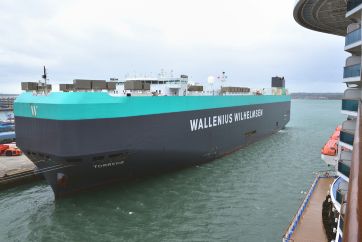
- WALLENIUS WILHELMSEN REPORTED SLIGHTLY WEAKER Q1 2026 shipping results, with adjusted EBITDA of USD 389 million, although improved logistics performance provided some offset. Demand for shipping, particularly from Asia, remained strong, but rising charter and fuel costs pressured margins. The company indicated limited direct exposure to Middle East disruption but expects a significant impact from higher bunker costs in Q2. Tight capacity conditions persist despite new vessel deliveries, driven by strong demand linked to growing vehicle exports. The group forecasts full-year EBITDA of around USD 1.6 billion, lower than previously expected, reflecting increasing cost pressures and ongoing market volatility.
- AAL SHIPPING HAS INTRODUCED ITS LATEST SUPER B-CLASS multipurpose heavy-lift vessel, AAL Mumbai, marking continued fleet expansion and focus on the Indian market. The 32,000 dwt (deadweight tonnage) vessel features enhanced lifting capacity of up to 800 tonnes and design improvements to handle complex project cargo more efficiently. Its deployment reflects growing demand from India’s infrastructure, energy and offshore sectors, which are driving increased project cargo volumes. The vessel strengthens AAL’s ability to offer combined cargo solutions and improve operational efficiency. The addition brings the Super B-Class fleet to eight vessels, with further units scheduled for delivery by 2028.
- MSC HAS ANNOUNCED A SIGNIFICANT RESTRUCTURING of its Oceania services, including changes to the Wallaby service and the introduction of new rotations. The revised Wallaby loop removes New Zealand calls and consolidates into a shorter 49-day rotation with seven vessels, focusing on key Australian and Chinese ports. Additional services such as the Noumea Express and Southern Loop aim to strengthen connectivity across Pacific Island markets and New Zealand. The changes also enhance links to global networks, including North America and Europe. MSC stated that the revisions are designed to improve schedule reliability and optimise network efficiency across Australia and New Zealand.
- MAERSK PLANS TO LAUNCH a new express China–Australia service, branded Qilin, in late July 2026 to capitalise on peak season demand. The service will operate a simplified rotation connecting Shanghai, Port Botany and Melbourne, using vessels of 2,800–3,500 TEU capacity. The offering is positioned as a premium product with faster transit times, including 14 days from Shanghai to Sydney. The service complements Maersk’s existing Dragon network but will be marketed independently. The launch occurs amid rising spot rates, network adjustments by competitors and tightening capacity conditions, with carriers reportedly reallocating space to higher-yield spot cargo in response to widening rate differentials.
- CMA CGM REPORTED A RESILIENT FIRST QUARTER for 2026 despite declining profitability, with EBITDA falling 31.6% to USD 2.11 billion and net income dropping to USD 0.25 billion. Revenue remained stable at USD 13.23 billion, while volumes increased slightly by 1.5% to 5.9 million TEU. The results reflect a volatile operating environment characterised by geopolitical tensions, lower freight rates and higher costs. Maritime revenue declined due to reduced average revenue per TEU. The group highlighted operational flexibility, cost control and diversified activities as key factors supporting performance and noted ongoing adjustments to services and logistics networks in response to global disruptions.
AIRFREIGHT NEWS
- AIR CARGO DEMAND DECLINED IN MARCH as geopolitical disruption and seasonal factors weighed on the market. Data from IATA showed global demand, measured in cargo tonne-kilometres, fell 4.8% year-on-year, while capacity dropped 4.7%. The downturn was attributed to the Middle East conflict disrupting hub operations, alongside the typical post–Lunar New Year slowdown. Regional performance diverged, with Middle Eastern carriers experiencing significant declines, while Asia Pacific, Europe, and Latin America recorded modest growth. Despite the decline, global industrial production and trade indicators remained positive.
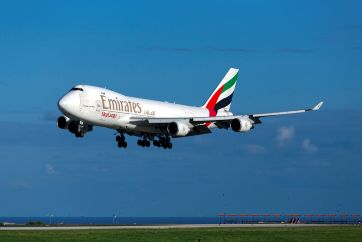
- EMIRATES SKYCARGO HAS LAUNCHED a new weekly freighter service linking Toronto with Dubai via Amsterdam, adding 100 tonnes of capacity per flight and targeting growing trade flows between Canada, the UAE and Europe. The service supports shipments including pharmaceuticals, perishables and electronics, while strengthening connectivity across Emirates’ global network. The expansion forms part of a broader fleet growth strategy, with multiple Boeing 777 freighters added this year and further aircraft on order. The airline is also adjusting its network with new routes across Europe, Asia and India, reflecting ongoing demand for dedicated cargo capacity and diversification of trade lanes.
- AIR CARGO MARKETS are showing early signs of stabilisation following recent volatility, although capacity constraints and uneven demand persist. Forwarders and airlines are actively repositioning operations, securing capacity and adjusting networks as Middle East disruptions ease. Companies such as DHL and DSV reported resilient profitability, while capacity additions on key Asia-Europe and transpacific lanes continue. Market data indicates spot rates remain elevated year-on-year despite slower growth, with strong demand from e-commerce, AI-related shipments and ocean-to-air conversions. However, demand signals are becoming more fragmented, and structural constraints on capacity, alongside geopolitical uncertainty, continue to influence pricing and network decisions.
- GLOBAL AIR CARGO SPOT RATES reached their highest level in three years in April, rising more than 30% year-on-year to USD 3.34 per kilogram. The increase was driven largely by capacity shortages linked to Middle East disruptions, although analysts indicate the market is beginning to stabilise as capacity returns. Rate increases have started to ease, and overall capacity has largely recovered to pre-disruption levels. Despite this, pricing remains elevated compared with previous years, reflecting ongoing supply-demand imbalances. Analysts suggest rates may gradually decline in coming months, though the pace of adjustment is expected to be slower than the earlier surge.
- LUFTHANSA CARGO REPORTED IMPROVED FINANCIAL PERFORMANCE in Q1 2026, supported by capacity shortages linked to the Middle East conflict. Revenues increased 5% to €876m, while operating profit rose 40% to €83m, and cargo traffic grew 7%. The disruption reduced available capacity in the market, boosting yields and volumes for carriers able to maintain operations, particularly on Asia-Europe routes. However, higher fuel costs and operational challenges, including strikes, offset some gains. While demand remained stable overall, the carrier noted increased uncertainty in the outlook due to ongoing geopolitical risks and cost pressures.
- E-COMMERCE AIR EXPORT VOLUMES FROM CHINA declined 6% year-on-year in March, marking the first contraction since mid-2023. The drop was driven by reduced demand from North America and the Middle East, linked to regulatory changes in the US and geopolitical tensions. Shipments to North America fell 24%, while volumes to the Middle East and South Asia dropped 45%. Growth in Europe and Latin America partly offset the decline but was insufficient to reverse the overall trend.
- THE AIR FREIGHT MARKET IS TRANSITIONING out of its peak disruption phase, with capacity recovering and jet fuel shortages easing. Despite this, freight rates remain significantly above pre-conflict levels, indicating a structural shift in market pricing. Data shows fuel prices have moderated from recent highs but remain substantially elevated year-on-year, while capacity is returning gradually rather than rapidly. Trade lanes are also evolving, with stronger activity on Asia-Europe, Asia-Middle East and Europe-North America routes. The market is adapting to a new pricing environment, shaped by geopolitical risk, network adjustments, and sustained demand for high-value cargo such as electronics, pharmaceuticals and e-commerce shipments.
- WIDEBODY FREIGHTER CONVERSIONS exceeded narrowbody conversions in 2025 for the first time since 2009, driven primarily by a sharp slowdown in narrowbody activity. Narrowbody conversions fell to fewer than 20 aircraft, compared with around 70 in 2024, reflecting oversupply following post-pandemic demand. While widebody conversions also declined year-on-year, they remained comparatively stronger due to tighter availability of suitable aircraft. The market continues to face feedstock constraints for widebody conversions, although activity is expected to gradually increase in coming years.
- QATAR CARGO EXPERIENCED DECLINES in both revenue and volume during its latest financial year, as Middle East conflict disruptions and supply chain shifts impacted operations. Revenues fell 9.6% to $4.45bn and volumes dropped 9.1% to 2.8 million tonnes. Despite this, the carrier maintained its position as the world’s largest international airfreight operator with a 12% market share. Operations stabilised towards the end of the period, with capacity fully deployed and network performance recovering. The airline continued to expand freighter routes, partnerships and digital capabilities, adjusting capacity across its network in response to shifting trade flows and ongoing market uncertainty.
OCEANIA PORTS AND AIRPORTS
- MEDITERRANEAN SHIPPING COMPANY has expanded its Australian intermodal footprint by assembling a new inland rail network linking major ports with regional hubs. The network enables direct container movements from Sydney terminals to Minto and from Melbourne to inland centres including Ettamogah, Griffith and Bomen, reducing reliance on road transport. The carrier states the model simplifies logistics through a single booking process and integrated service managed end to end. Additional benefits cited include lower delivery costs, faster turnaround times and streamlined equipment returns. The expansion reflects MSC’s continued investment in landside infrastructure through MEDLOG, including acquisitions and terminal development in Victoria.
- THE VICTORIAN GOVERNMENT has allocated AUD 124.5 million in the 2026–27 budget to progress the proposed Victorian Renewable Energy Terminal at the Port of Hastings. Funding will support the environmental effects statement process for the project, which is designed as Australia’s first heavy-duty port facility dedicated to offshore wind development. The terminal is intended to enable assembly of wind turbines prior to offshore installation, supporting the state’s renewable energy strategy. The project is currently undergoing environmental assessment and community consultation, with further works dependent on planning approvals.
- PACIFIC TUG GROUP IS DEVELOPING THE PACIFIC MARINE BASE BUNDABERG, the first major port infrastructure project at the Port of Bundaberg in over 60 years. The facility is being designed specifically for heavy-lift, project and regulated cargo, with a 190-metre high-capacity wharf, hybrid RoRo (roll on / roll off) ramp and up to 130,000 square metres of waterside laydown. The development aims to address constraints at congested east coast ports, offering an alternative gateway for oversized and regulated cargo, including lithium battery units. Construction began in 2022, with completion targeted for late 2026 and total investment expected to exceed AUD 35 million.
- FREMANTLE PORTS WILL INCREASE SHIP AND CARGO CHARGES by 4.6% from 1 July 2026, reflecting movements in the Perth Consumer Price Index. The increase will be applied across all charges, with the port stating it will maintain consistency and clarity in the charging framework. Changes also include revised definitions for berth occupancy charges when vessels are not working cargo, and a shift from weekly to daily rates for breakbulk and undercover storage charges. Berth hire fees will apply to encourage efficient use of port infrastructure, with defined free periods upon arrival and before departure.
CUSTOMER SERVICE
If you would like further information about any of the above items, please contact one of our friendly Fracht Team members at fracht@frachtsyd.com.au
Share this news via